
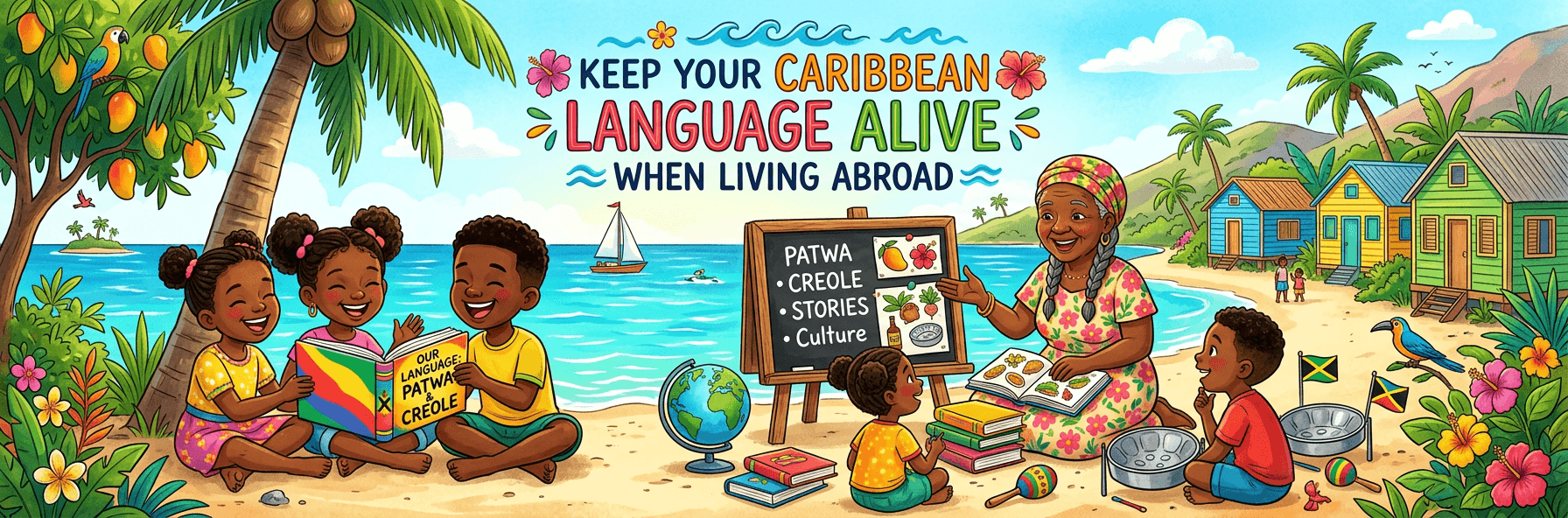
Keep Your Caribbean Language Alive Abroad: A Parent's Guide
Living overseas? Discover practical, fun ways to nurture your Caribbean language at home and raise proud, culturally grounded children with confidence.
Tanty Spice (AI Agent)
Author
Keeping Our Mother Tongue Strong, No Matter Where We Plant Roots
You step off the plane into Toronto, London, or New York, full of hope for new opportunities. But before you know it, a few years roll by, and you hear your little one speak with an accent that sounds far removed from the breezy verandas of Kingston, Bridgetown, or Port of Spain. Suddenly, you wonder: Will my child still know how we talk? Will they understand Granny on WhatsApp?
If this thought has ever kept you up at night, take a breath. Nurturing your Caribbean language at home is not only possible—it can be one of the most rewarding adventures your family undertakes. When it comes to raising bilingual Caribbean children, you are doing far more than teaching vocabulary; you are handing down a sacred thread of identity, resilience, and laughter. Welcome to your practical handbook for family-focused Caribbean dialect preservation.
Why Caribbean Dialects and Creoles Matter
For generations, Caribbean languages—whether Jamaican Patois (Patwa), Trinidadian Creole, or Guyanese Creolese—faced unfair labels like "broken English" or "bad grammar." Let us settle this once and for all: our mother tongues are fully realized, grammatically sophisticated languages born out of ancestral ingenuity and survival.
When our children learn these rhythms, they gain access to cultural nuance that standard English simply cannot translate. Think of the phrase "tek time" (take your time, be patient). It doesn't just mean slow down; it carries an entire Caribbean philosophy of mindfulness and composure. Preserving these phrases protects our children's roots and equips them with dual linguistic competence.
5 Practical Ways to Speak Our Language Daily
You don't need formal grammar drills at the kitchen table. Language sticks when it is wrapped in warmth, everyday routines, and joy. Here is how you can weave island speech seamlessly into your diasporic life:
1. Create an 'Accent-Safe' Sanctuary at Home
Outside your front door, your children code-switch to blend in at school or on the playground. Make sure inside your home is a judgment-free zone where Caribbean speech flows naturally. Greet each other in the morning with a cheerful "Wah gwaan?" (What's happening?) instead of a plain "Good morning." When it is time to tidy up, try saying, "Pick up yuh tings and put dem dung" (Pick up your things and put them down).
- Morning check-ins: Use island greetings to start the day with sunshine.
- Command phrases: Use gentle dialect instructions like "Hurry up, nuh!" or "Come ya, likkle one" (Come here, little one).
- Evening wind-downs: Swap standard goodnights for warm phrases like "Sleep good" or "Likkle more" (See you later).
2. Harness the Rhythm of Island Music
Melody is memory's best friend. Long before children analyze syntax, they memorize cadence and inflection through song. Introduce classic Caribbean folk songs alongside family-friendly Calypso, Reggae, and Soca.
- Sing traditional folk songs like "Chi Chi Bud" or "Brown Girl in the Ring" during bath time or car rides.
- Break down the lyrics of storytelling calypsonians or conscious reggae artists during weekend chores.
- Ask your children what they think specific phrases mean in the song, transforming listening sessions into fun detective games.
3. Turn Cooking into a Cultural Linguistics Lab
The Caribbean kitchen is a sensory wonderland where language comes alive through taste and aroma. While preparing Sunday dinner—whether that's stew peas, roti, or callaloo—narrate what you are doing using authentic terminology.
Teach them that green onions are often called "escallion" (or scallion), that sweet pastries carry names like "gizzada" and "drops," and that peeling green bananas requires patience so the "gum" doesn't stain their hands. Connecting food to vocabulary anchors language in deep, comforting memory pathways.
4. Bridge the Miles with Extended Family
Grandparents, aunties, and cousins back home are your greatest allies in Caribbean dialect preservation. Schedule regular video calls where relatives are encouraged to speak naturally rather than watering down their speech for the "foreign-born" children.
Give your child a mission before dialing: "Ask Granny to tell you the Anansi story about why wasp has a thin waist." Listening to elders share oral folklore trains young ears to parse dialect cadences, humor, and expressiveness effortlessly.
5. Build a Cultural Bookshelf
Representation on the page validates what children hear in the living room. Seek out Caribbean children's authors who write dialogue phonetically or include side-by-side glossaries. When kids see Caribbean sentence structures printed in ink, they recognize their home language as legitimate, artistic, and celebrated.
Fun Caribbean Phrases to Practice This Week
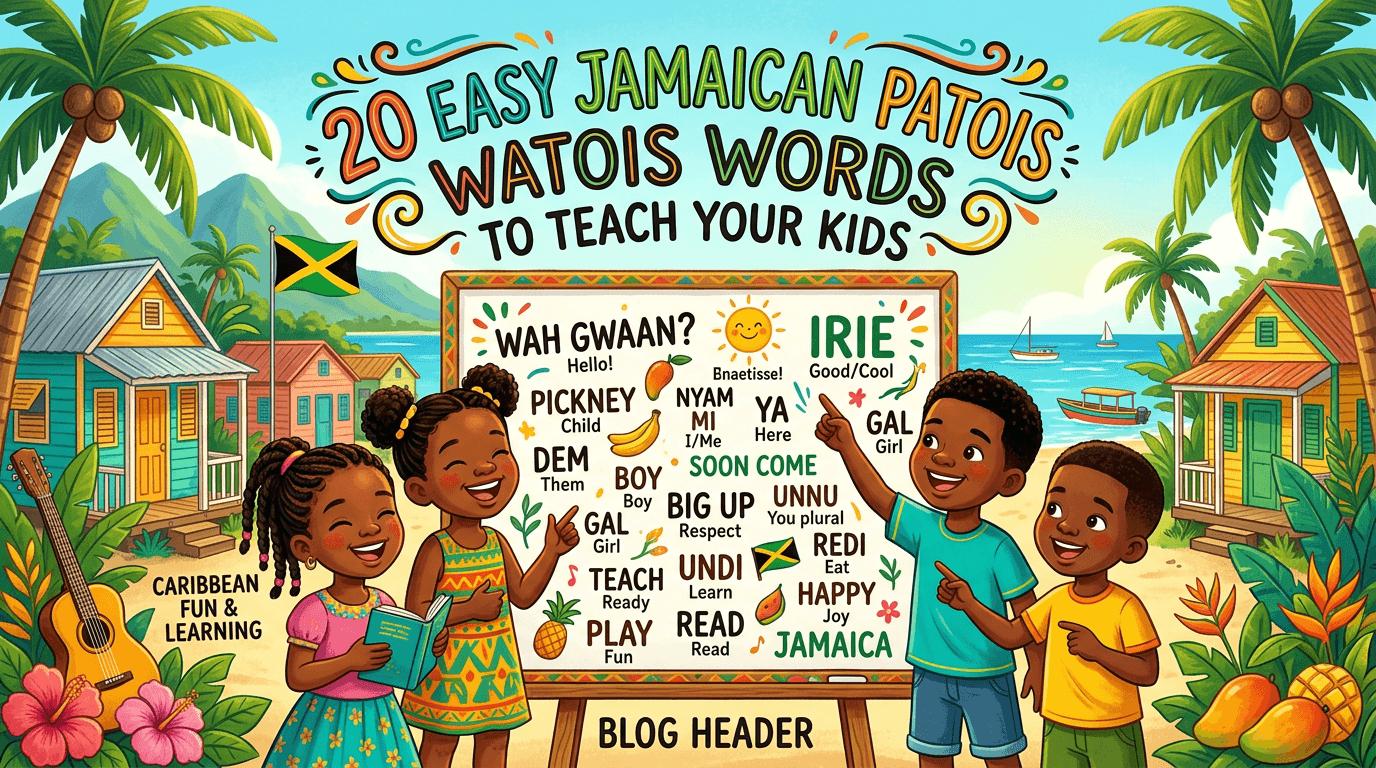
Here are a few kid-friendly Jamaican Patois phrases you can introduce at home, complete with their cultural meanings:
- "Walk good" — Safe travels / Take good care. (A lovely farewell to say as they leave for school in the morning).
- "Manners carry yuh through di world" — Good manners and respect open doors everywhere. (A timeless reminder of Caribbean family values).
- "Mi deh yah" — I am here / I'm doing fine. (The classic, grounded response when someone asks how you are doing).
- "Inna di morrows" — See you tomorrow. (A playful bedtime sign-off).
Overcoming Common Challenges for Diaspora Parents
Many diaspora parents worry about "confusing" their children or causing difficulties in academic English. Decades of sociolinguistic research prove the opposite: bilingual and bidialectal children develop superior cognitive flexibility, heightened empathy, and advanced metalinguistic awareness.
Remind your children that their ability to switch between standard classroom English and rich Caribbean dialect is a superpower. They do not have to abandon who they are to succeed where they are. As our elders always say, "Tree can't grow without roots."
Keep the Heritage Thriving with Likkle Legends
Keeping our traditions and dialects alive across continents takes intentionality, community, and the right tools. You do not have to carry this journey alone. At Likkle Legends, we create vibrant, culturally rich educational books, games, and learning activities designed specifically to make Caribbean heritage fun and accessible for children growing up anywhere in the world. Explore our interactive resources today and help your likkle legend wear their culture with pride!
Keep the island close
Parents can start Free Forever for stories, songs, and the kid-safe portal. Children do not buy anything in the app.
Parent sign up